
Selma Lagerlöf’s storytelling craft is a big part of why The Rattrap remains so memorable in the CBSE Class 12 English Flamingo syllabus. She builds the story around one extended metaphor, tells it in the unmistakable rhythm of a fairy tale, and layers in irony and subtle humour that make a serious theme feel light and readable. This post walks through the literary devices and narrative techniques you should be able to identify and discuss in your exam answers.
Extended Metaphor: The World as a Rattrap
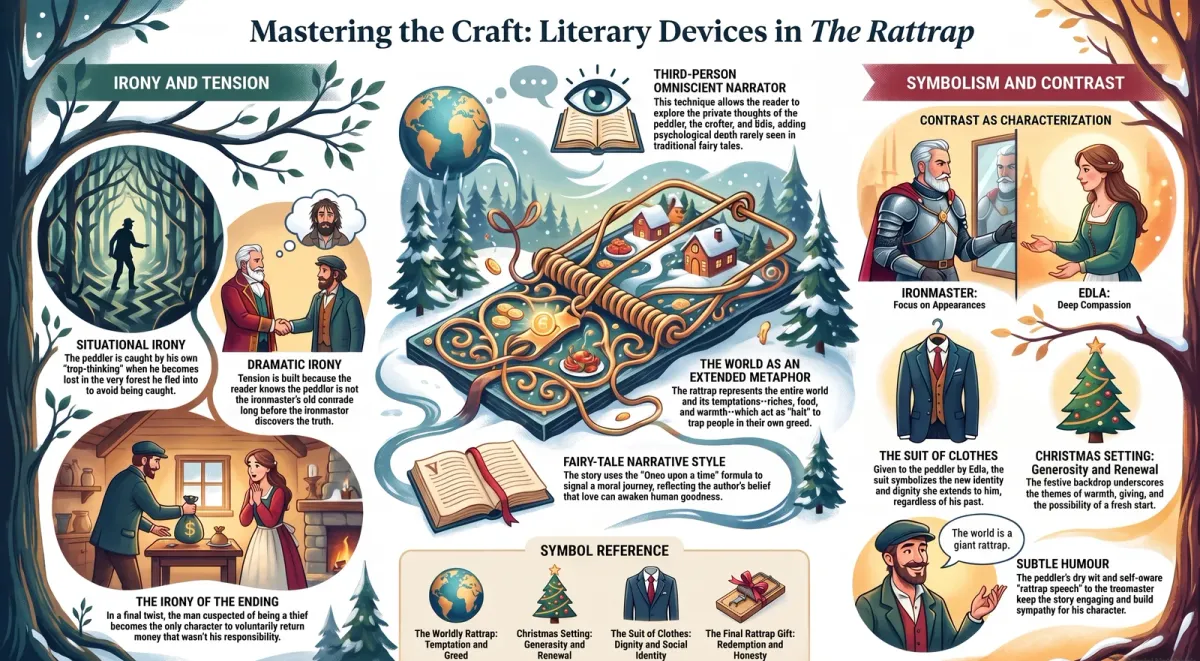
The most important device in the story is its central, extended metaphor. A rattrap — a small, everyday object — is expanded to represent the entire world and every temptation it offers: riches, comfort, food, warmth. Lagerlöf sustains this metaphor across the whole narrative rather than using it once and dropping it: the peddler is caught by his own trap-thinking when he gets lost in the forest, and he returns to the same image in his final speech to the ironmaster and in the literal rattrap he leaves behind as a Christmas gift. This consistency is what gives the story its unity and makes the ending feel earned rather than coincidental.
Fairy-Tale Narrative Style
The story opens with the classic fairy-tale formula, “Once upon a time,” immediately signalling its tone to the reader. This choice matters: fairy tales traditionally teach a moral lesson through a simple, almost timeless plot, and Lagerlöf uses the form deliberately, since her broader body of work is built around the belief that human goodness can be awakened through understanding and love. The third-person omniscient narrator moves easily between characters’ thoughts and feelings, letting readers see the peddler’s private cynicism, the crofter’s loneliness, and Edla’s compassion all in turn — a technique fairy tales rarely attempt in such psychological depth.
Situational and Dramatic Irony
The Rattrap is full of irony, and much of its emotional power depends on it. The peddler’s speech about the world being a trap is spoken in scorn, yet events prove his own words true when he becomes lost in the forest he flees into — an example of situational irony, where the outcome directly contradicts what a character expects. Dramatic irony appears when the ironmaster mistakes the peddler for an old comrade: the reader knows the truth before the ironmaster does, which builds tension toward the inevitable moment of discovery. Even the ending carries irony — the man everyone suspects of being a thief turns out to be the one character who voluntarily returns money that was never even his own responsibility to give back.
Symbolism
Beyond the central rattrap metaphor, smaller symbols reinforce the story’s meaning. The Christmas setting itself symbolises generosity and renewal, providing the emotional context in which Edla’s kindness becomes possible. The suit of clothes the peddler is given, and later allowed to keep, symbolises the dignity and identity Edla extends to him regardless of his real background. Finally, the small rattrap left behind as a gift is a striking symbol in its own right: an object once used to catch small creatures becomes, in the peddler’s hands, an instrument of honesty and gratitude.
Contrast as a Structural Device
Lagerlöf builds much of the story through contrast rather than direct explanation. The warmth of the old crofter’s cottage is set against the cold, disorienting forest that follows. The ironmaster’s appearance-driven judgment is set directly against his daughter’s consistent compassion. Even the peddler’s opening cynicism is set against his closing act of honesty. These contrasts do the work of characterisation and theme-building without the narrator ever stating a moral outright — readers are left to draw the conclusion themselves.
Subtle Humour
Despite its serious undertones, The Rattrap has a light comic touch, largely carried through the peddler’s voice. His decision to let the ironmaster believe he is an old regimental comrade purely because it might earn him “a couple of kronor” is quietly funny, as is his sharp, self-aware rattrap speech delivered to the very man threatening to call the sheriff on him. This humour keeps the story entertaining even as it delivers a serious message about kindness and redemption, and it is one reason readers tend to sympathise with the peddler despite his dishonesty.
Why This Matters for Your Exam
CBSE questions on The Rattrap frequently ask students to identify how technique supports theme — for instance, how the extended metaphor structures the plot, or how irony builds sympathy for the peddler. Being able to name these devices and explain their effect, rather than simply listing them, is what separates a strong answer from an average one.
Related Reading
-
The Rattrap Summary and Analysis – CBSE Class 12 English Flamingo Chapter 4
-
The Rattrap Character Sketch: Peddler, Crofter, Ironmaster and Edla – CBSE Class 12
-
Themes in The Rattrap: Materialism, Loneliness and Redemption Explained
-
The Rattrap NCERT Solutions – Understanding the Text, Working with Words & More
Prepare Smarter with ChampionsPrep
Understanding literary devices is key to scoring well in CBSE Class 12 English — practise device-spotting and technique-based questions with structured content built for chapters like The Rattrap. It is free to register & pay as you use — so you only spend on the practice you actually need, whenever you need it.
Test Your Knowledge
Literary Devices in The Rattrap: Symbolism, Irony and Narrative Style
Frequently Asked Questions
What is the central literary device used in The Rattrap? +
The extended metaphor of the world as a giant rattrap is the central device, sustained from the peddler's opening theory through to the literal rattrap he leaves as a gift at the end.
How does Selma Lagerlöf use irony in the story? +
She uses situational irony when the peddler becomes trapped in the very forest he flees into, and dramatic irony when the reader knows the truth about his identity before the ironmaster does.
Why does the story follow a fairy-tale narrative style? +
The 'Once upon a time' opening and simple, moral-driven plot reflect Lagerlöf's broader belief that understanding and love can awaken human goodness, a theme fairy tales are traditionally built to teach.
What does the small rattrap symbolise at the end of the story? +
It symbolises the peddler's redemption, transforming an object once used to trap and exploit into an instrument of honesty and gratitude.
How does humour function in The Rattrap? +
The peddler's dry wit and self-aware remarks lighten the story's serious themes and help build reader sympathy for him despite his dishonesty.
AI-powered practice — free to start