
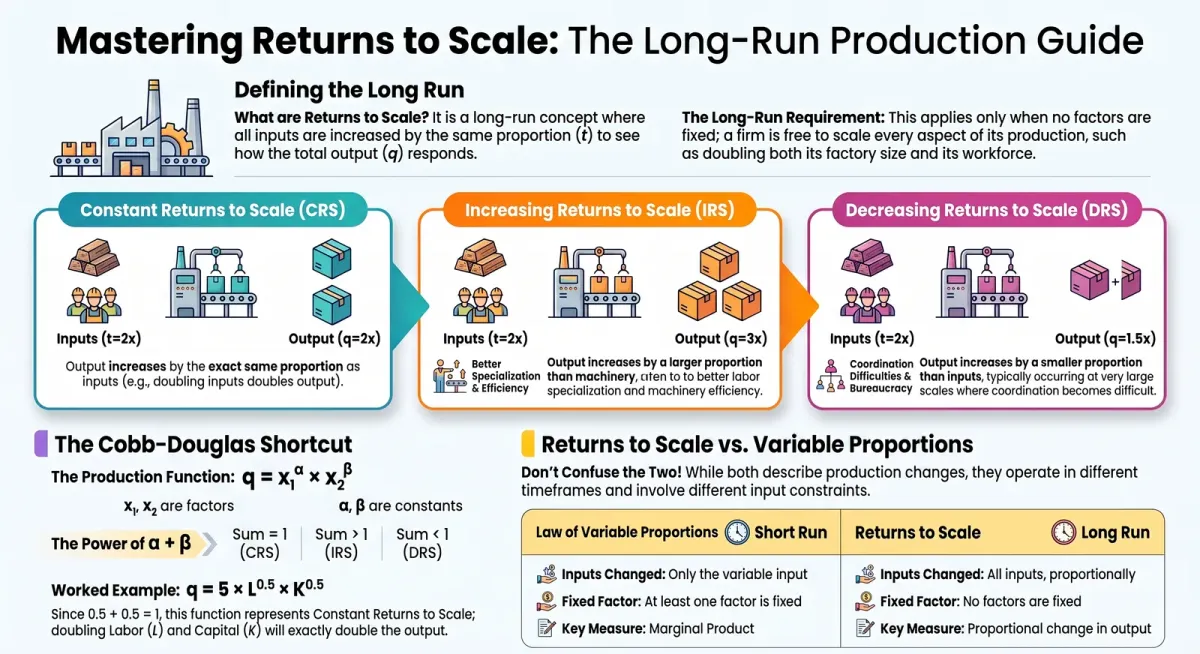
Returns to Scale Explained: CRS, IRS and DRS with Cobb-Douglas Production Function
Learn constant, increasing and decreasing returns to scale, plus the Cobb-Douglas production function — explained for CBSE Class 11 Economics.
Page 2 of the Economics article archive.
Learn constant, increasing and decreasing returns to scale, plus the Cobb-Douglas production function — explained for CBSE Class 11 Economics.
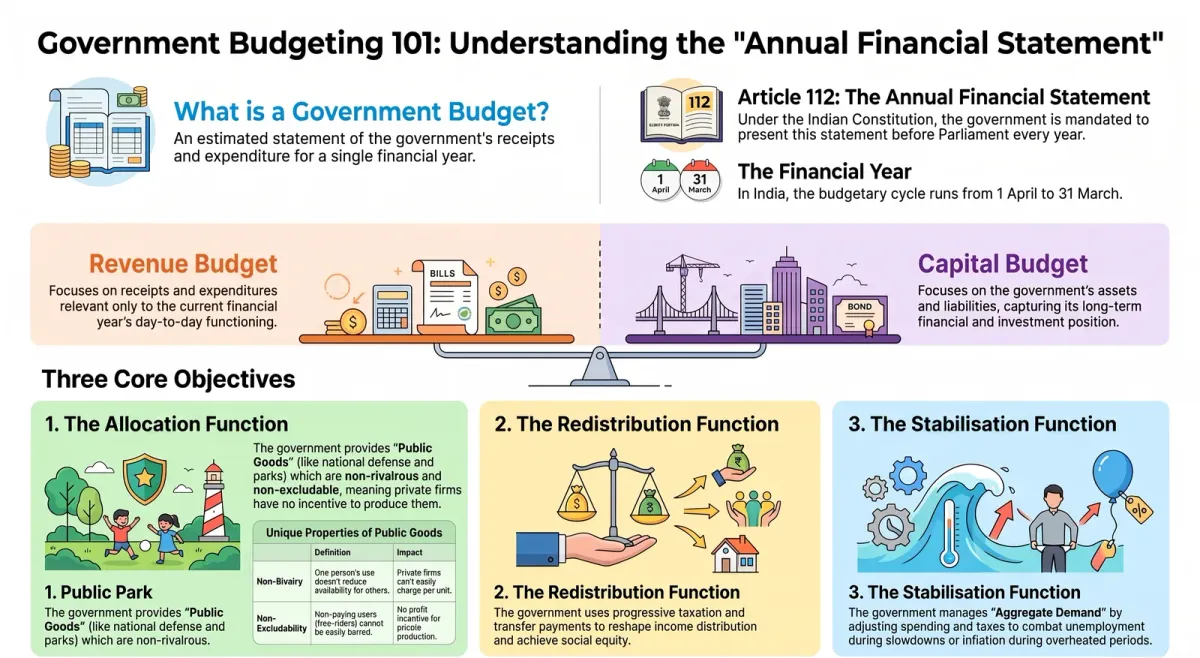
Learn the meaning of the government budget and its allocation, redistribution and stabilisation functions — CBSE Class 12 Economics.
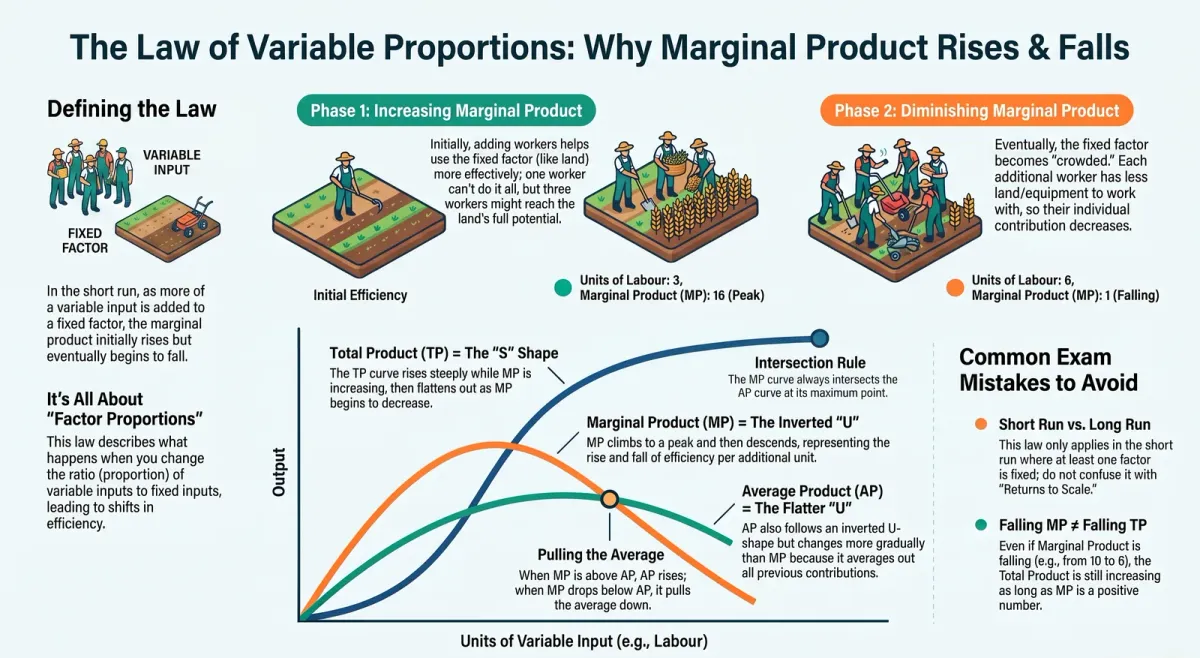
Understand the law of variable proportions and law of diminishing marginal product for Class 11 Economics, with reasons and curve shapes explained simply.
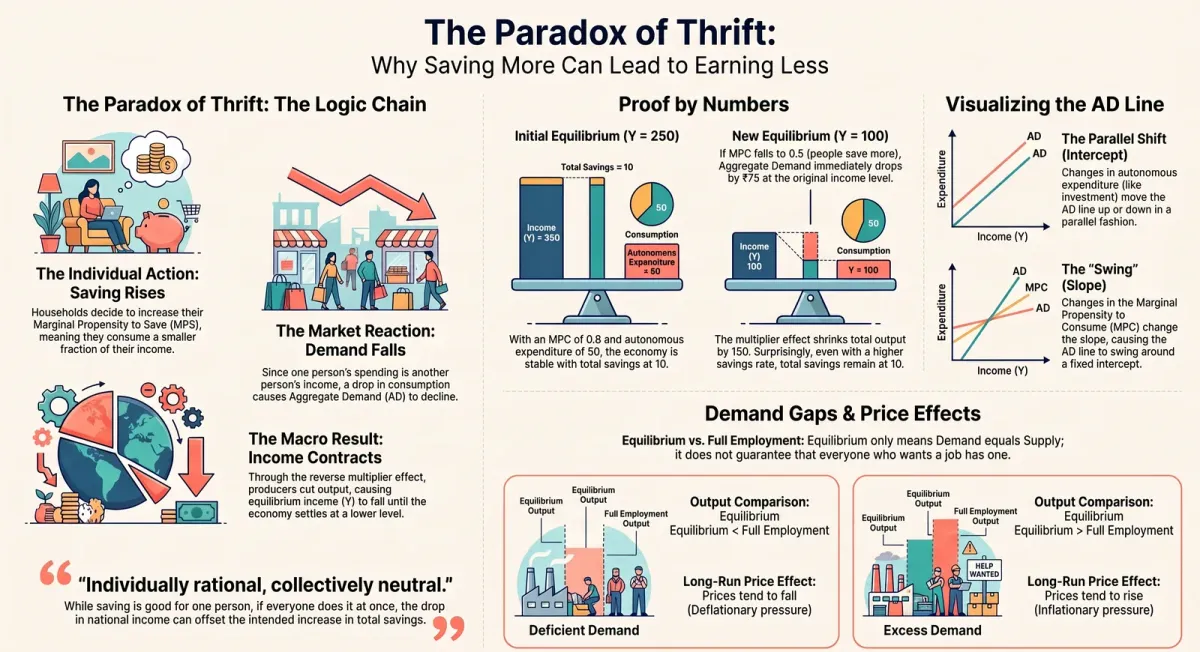
Learn the Paradox of Thrift, full employment income, and the difference between deficient demand and excess demand with solved examples for Class 12.
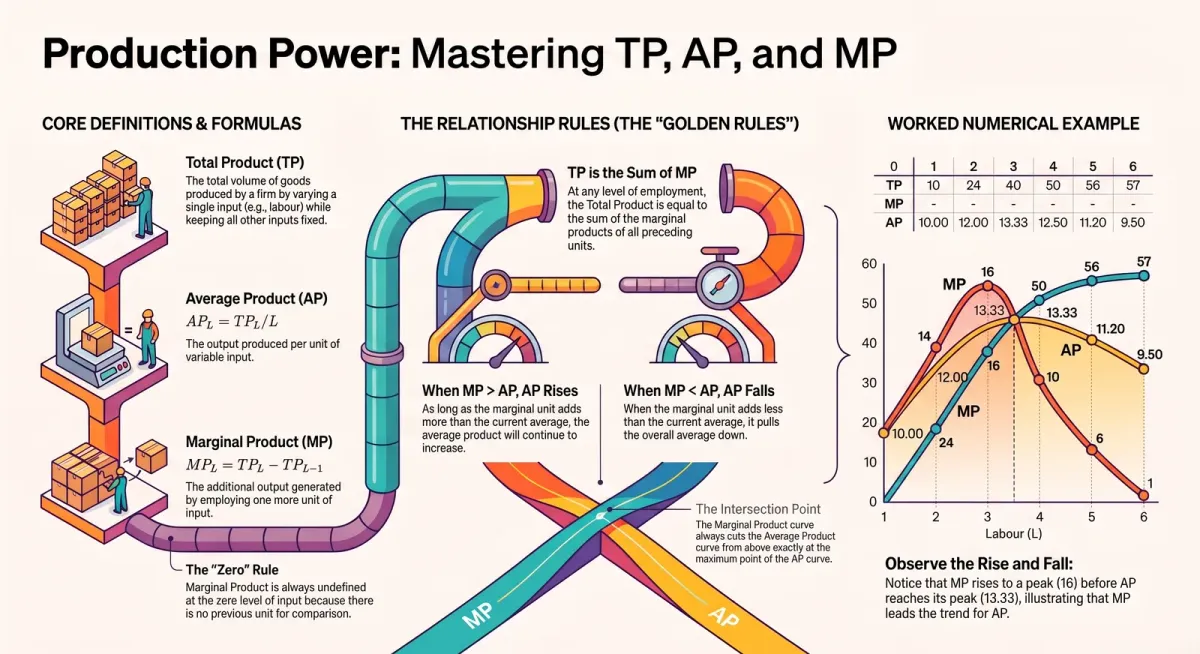
Master TP, AP and MP for Class 11 Economics with clear formulas, a worked numerical example, and the relationship between them. Ideal for CBSE exams and CUET.
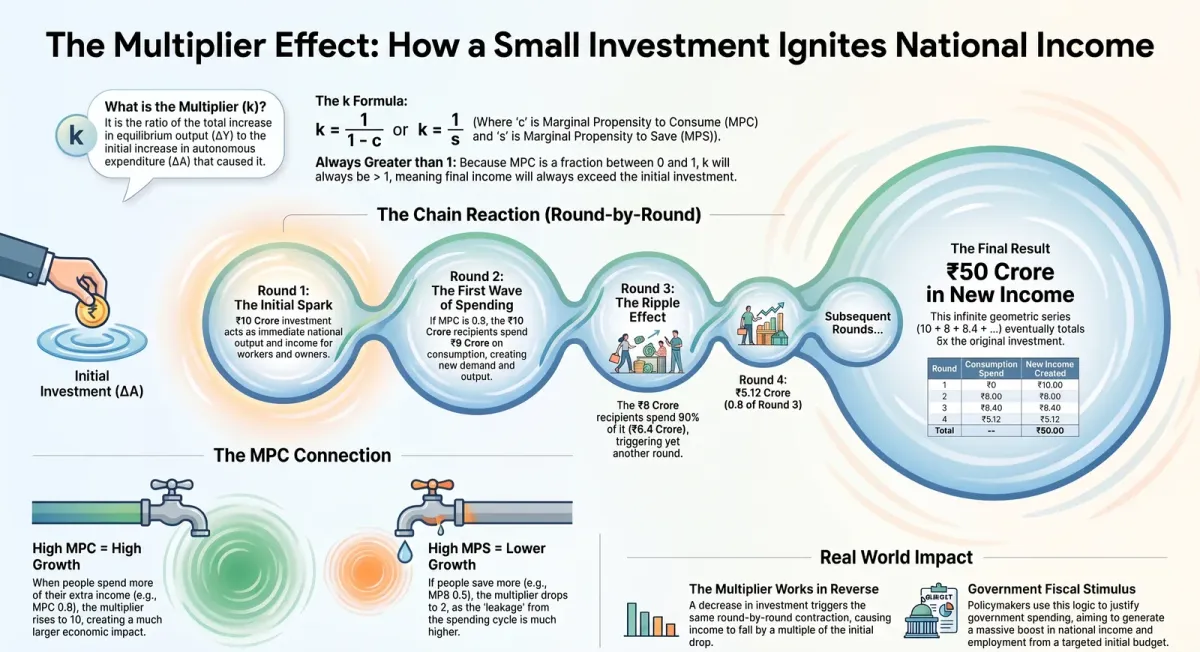
Understand the investment multiplier with the round-by-round mechanism, the formula k = 1/(1 - c), and solved examples for Class 12 Macroeconomics.
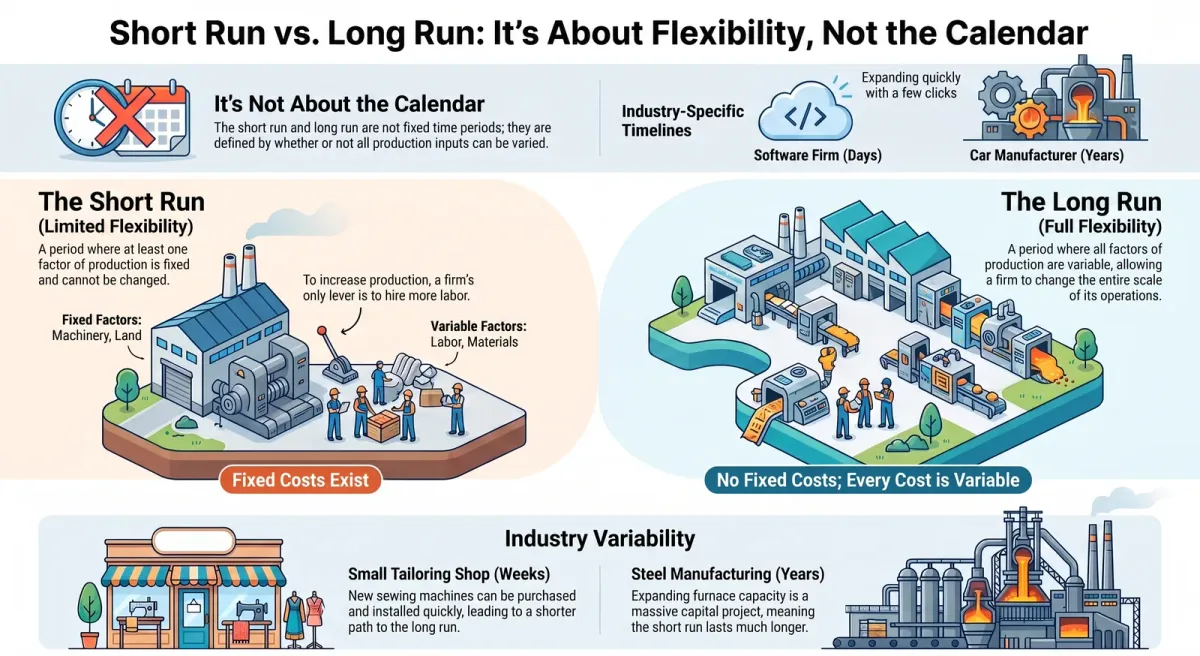
In economics, the short run has at least one fixed factor and the long run none, a distinction defined by variable inputs, not calendar time.
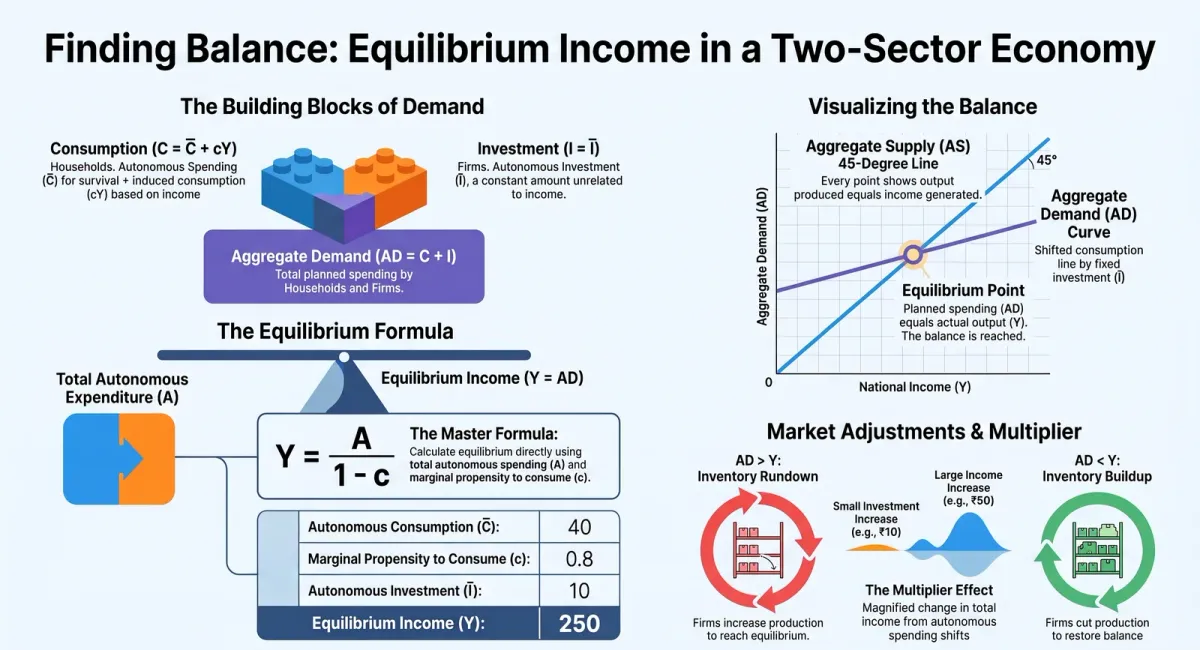
In the two-sector model, equilibrium income sits where planned aggregate demand equals output, and the Class 12 formula Y = A/(1 − c) gives it directly.
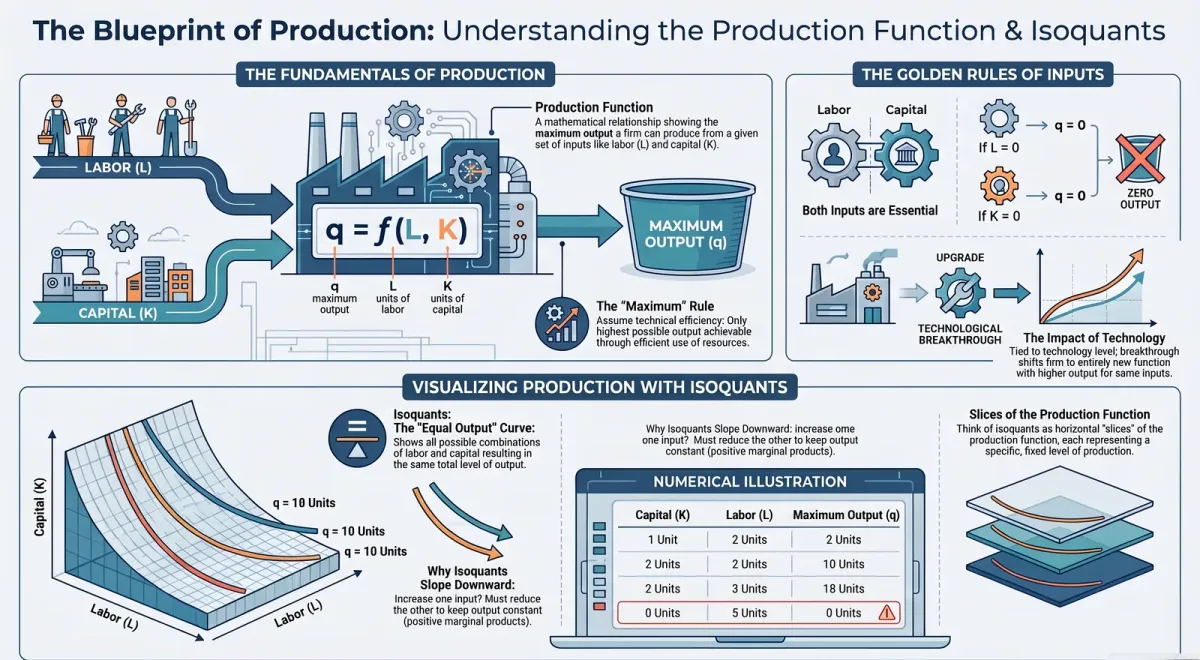
Learn the production function in Class 11 Economics: definition, formula q = f(L, K), a worked numerical example and isoquants for school exams and CUET.
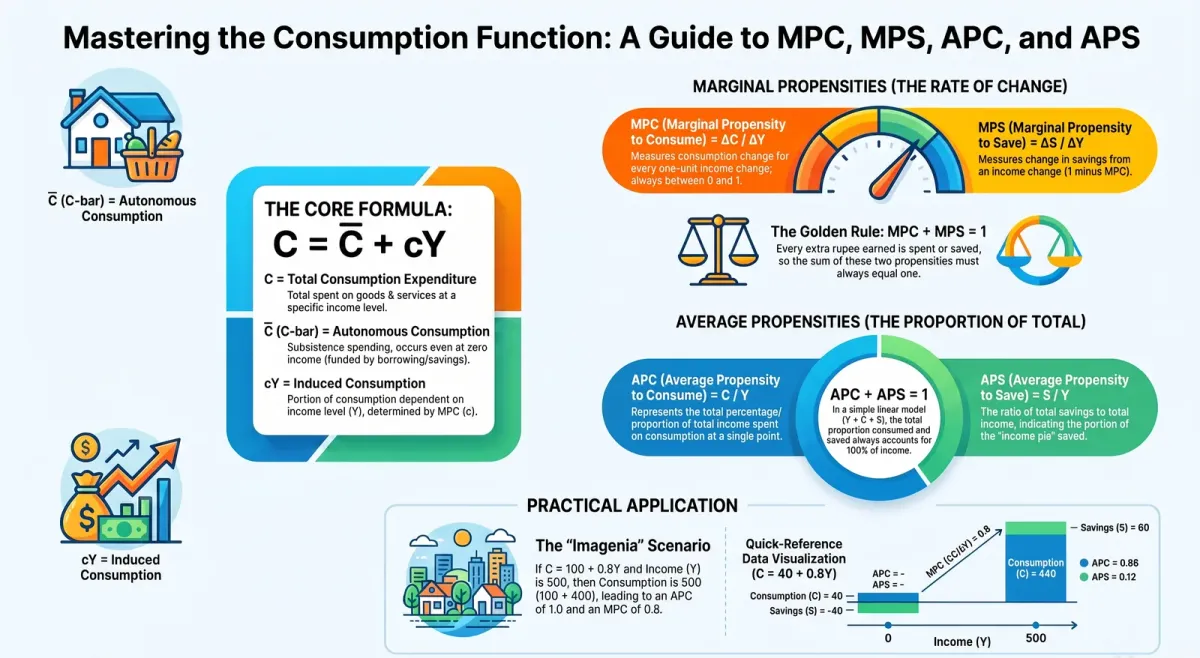
Master the consumption function, MPC, MPS, APC and APS with easy formulas, solved examples, and CBSE Class 12 exam tips for Macroeconomics.
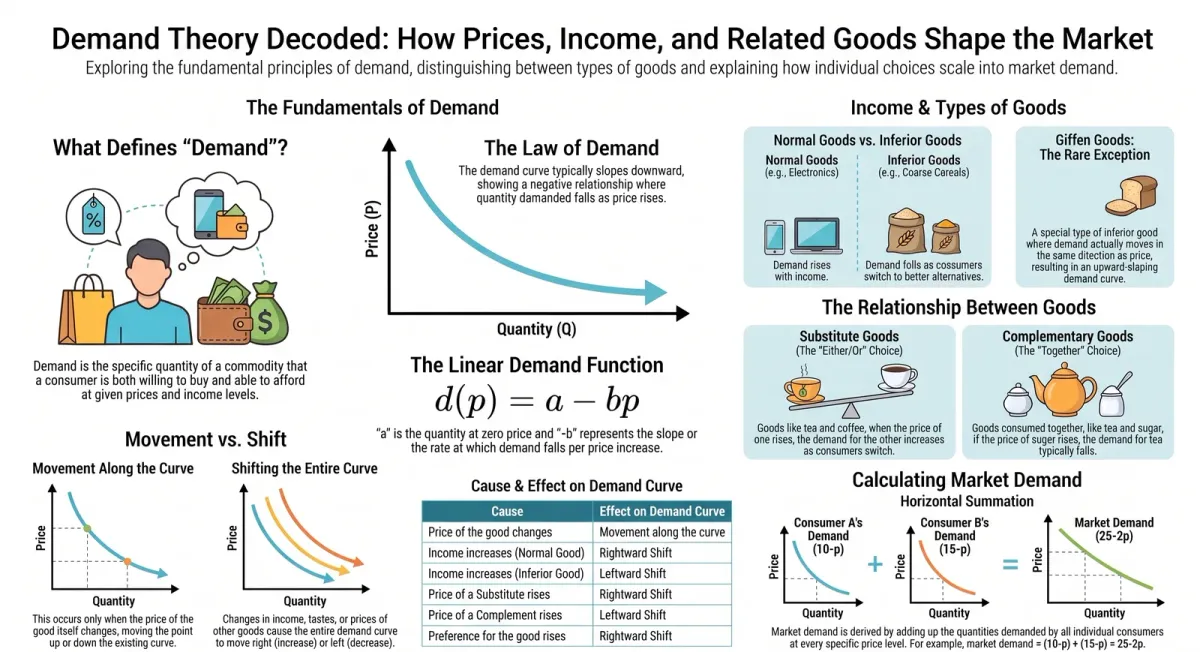
Learn demand, normal and inferior goods, Giffen goods, substitutes and complements, and how market demand is derived - Class 11 Economics explained simply.
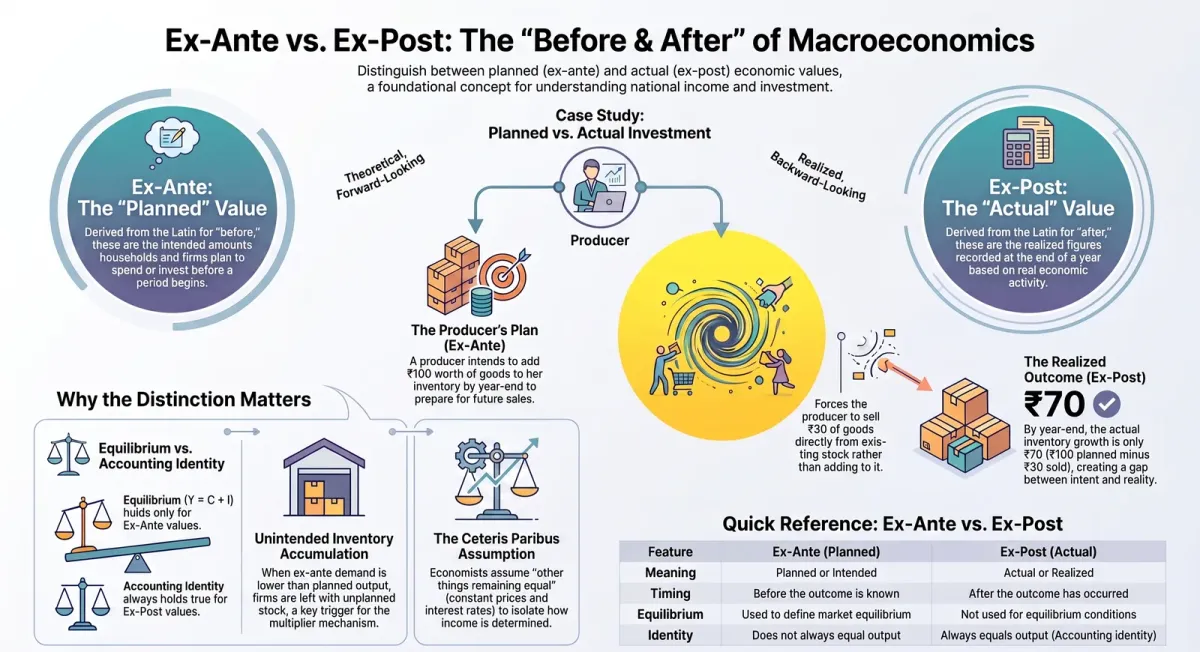
Understand the vital distinction between ex-ante (planned) and ex-post (realised) consumption, savings, and investment in CBSE Class 12 Macroeconomics.