
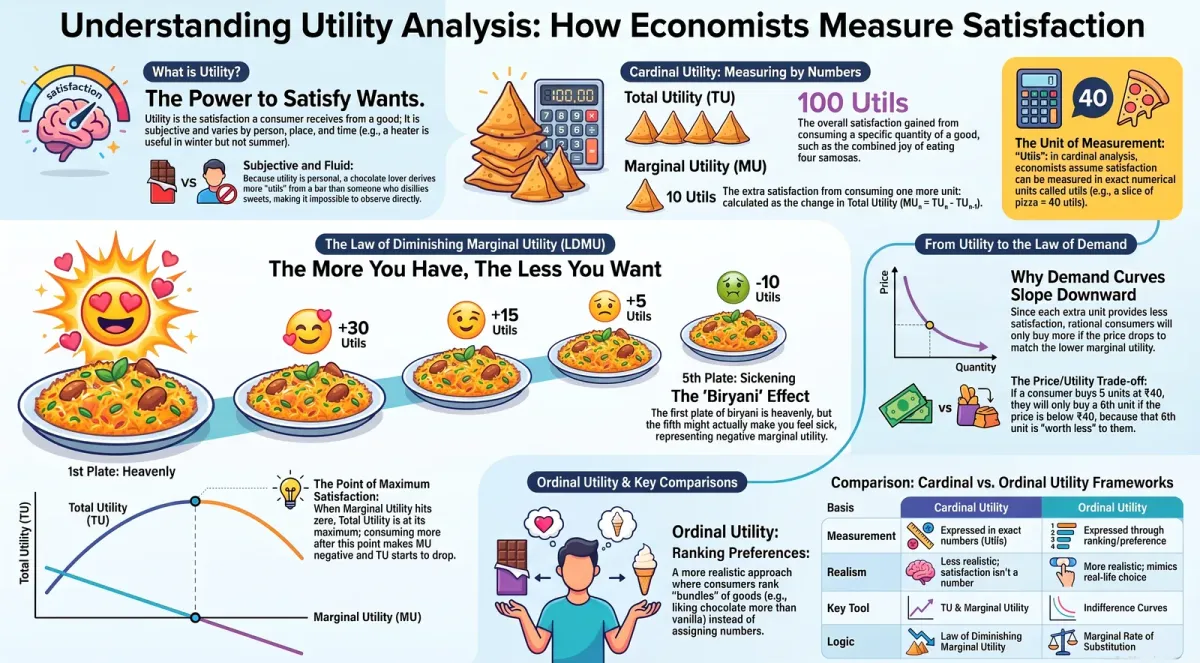
Utility Analysis in Economics: Cardinal vs Ordinal Utility (Class 11)
Understand cardinal and ordinal utility, total utility, marginal utility, and the Law of Diminishing Marginal Utility with simple Class 11 Economics examples.
Page 5 of the Economics article archive.
Understand cardinal and ordinal utility, total utility, marginal utility, and the Law of Diminishing Marginal Utility with simple Class 11 Economics examples.
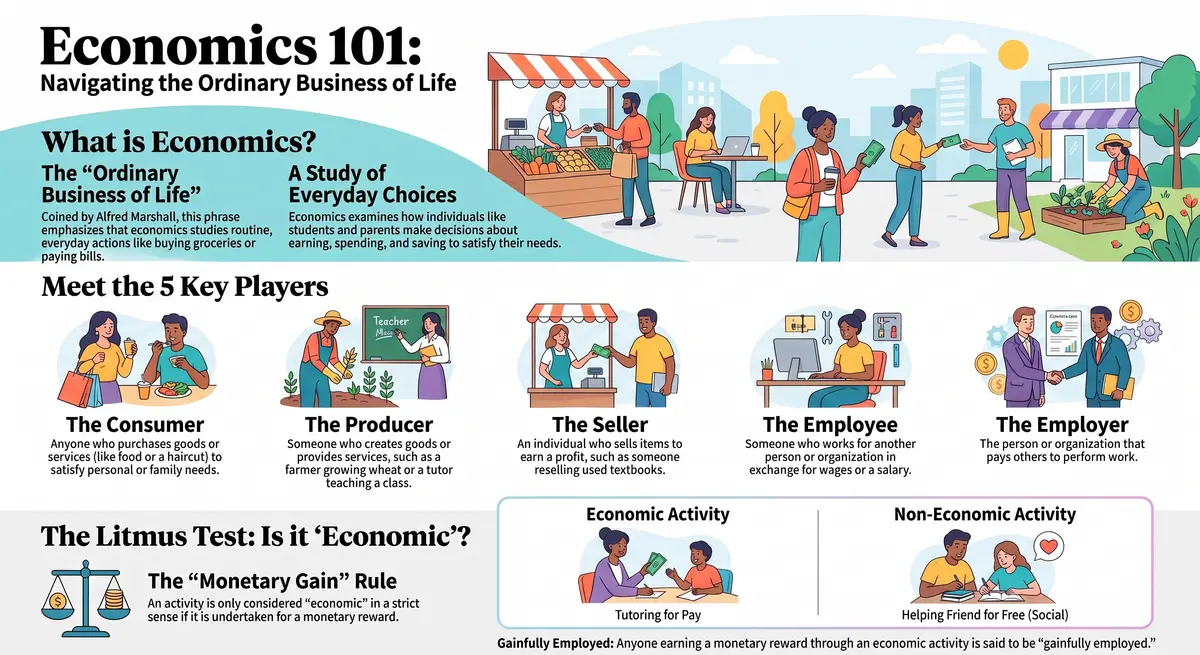
When you buy a cup of tea at the college canteen, sell your old cricket bat to a junior, take up a weekend tuition job, or hire someone to teach you guitar, you are quietly doing…
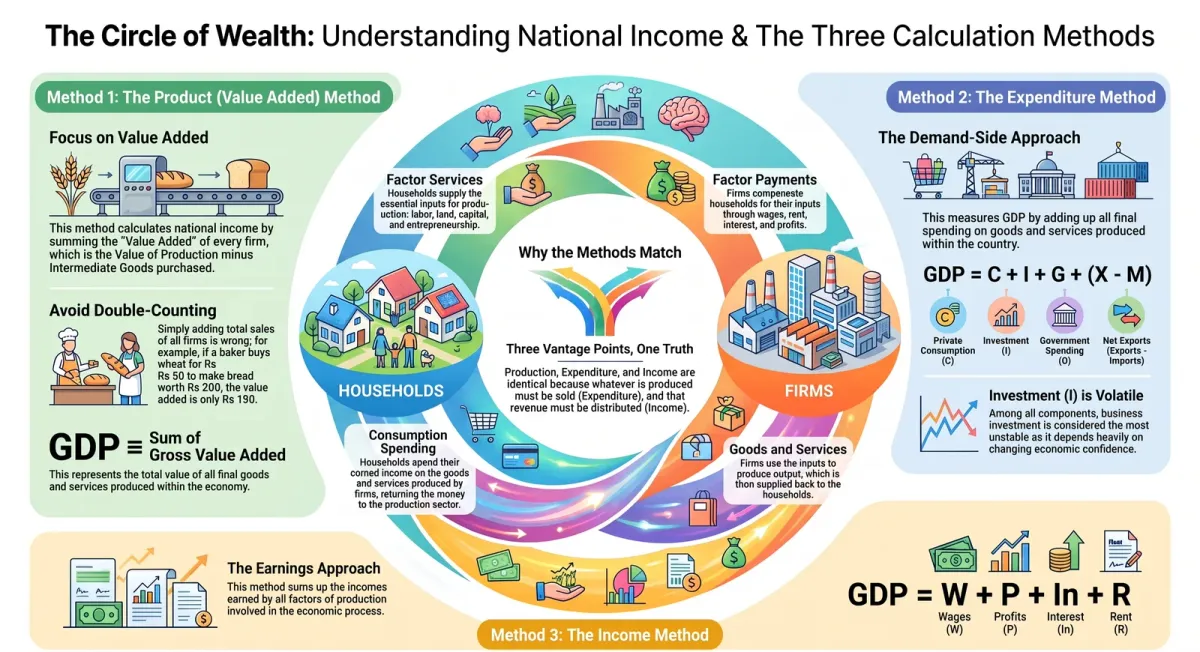
Master the circular flow of income and the 3 methods to calculate national income (Product, Income, Expenditure) for Class 12 Economics boards & CUET.
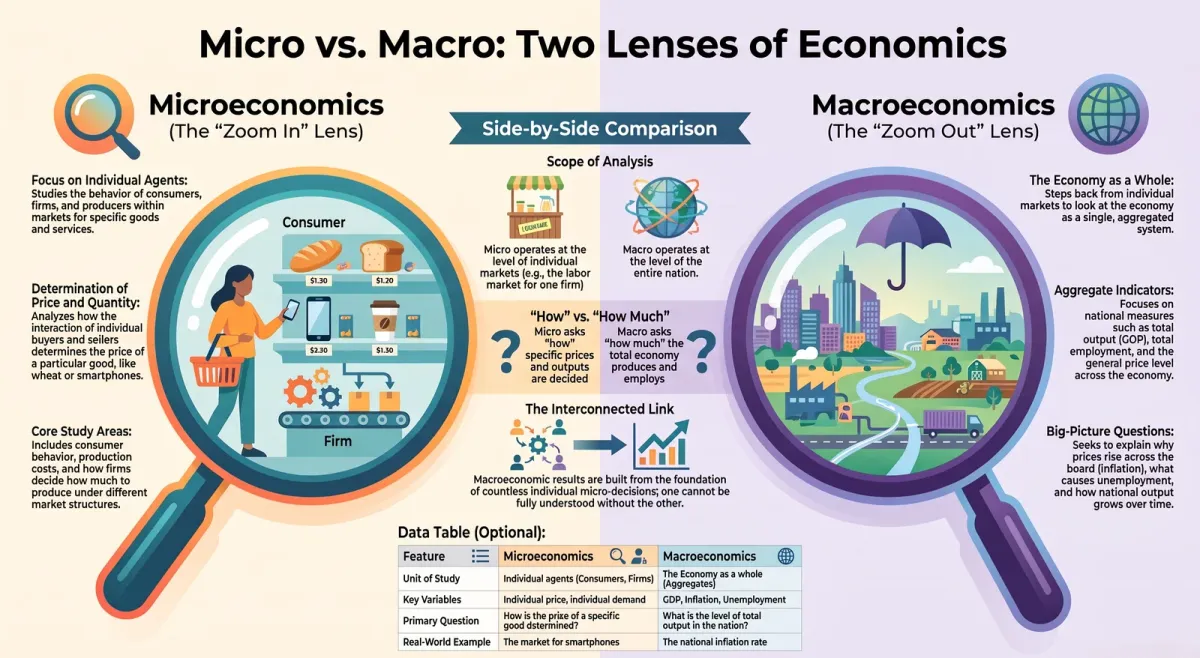
Learn the key differences between microeconomics and macroeconomics with clear examples, ideal for CBSE Class 11 Commerce students studying economics.
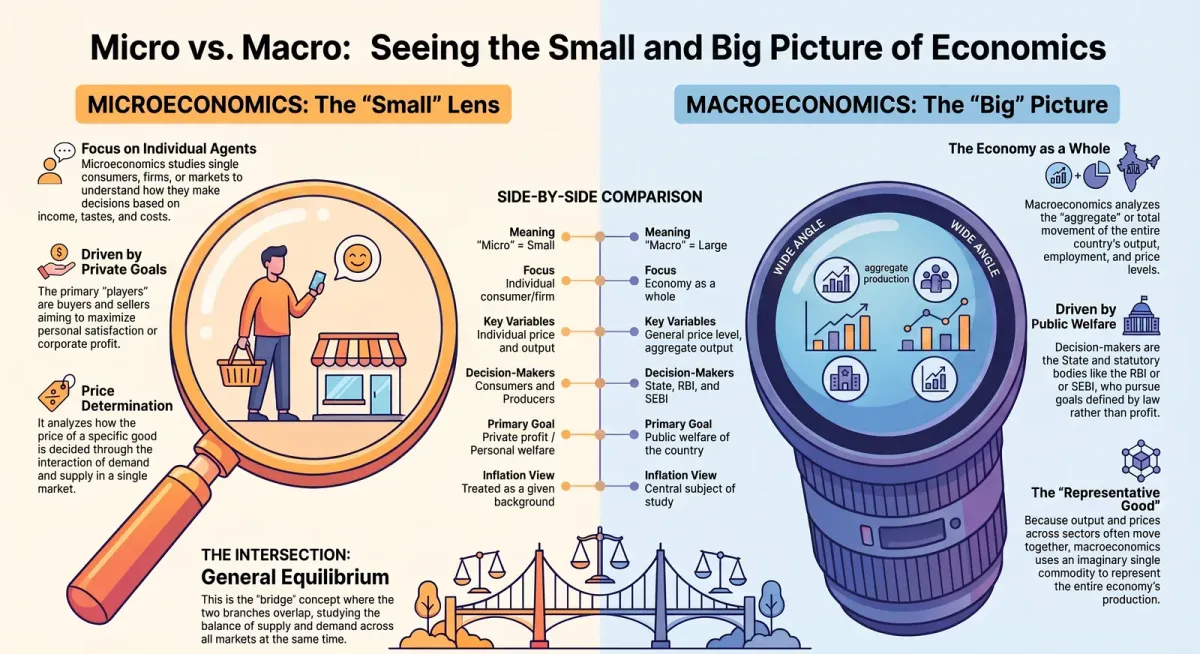
If you've just started Class 11 Economics, one of the first big questions you'll run into is this: what actually separates microeconomics from macroeconomics?
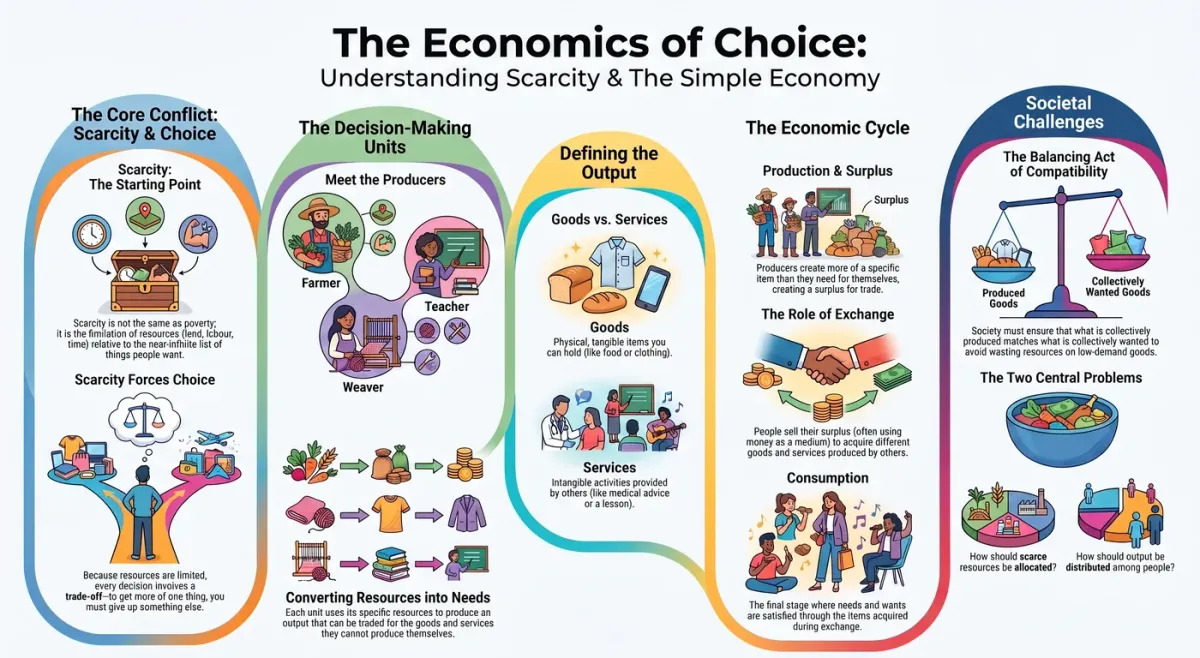
Understand why scarcity forces choice and how a simple economy functions in this exam-focused guide for CBSE Class 11 Introductory Microeconomics Chapter 1.
Learn what happens when aggregate demand is too high or low: inflationary gap, deflationary gap, reasons, and corrective fiscal and monetary measures.
Understand the Keynesian investment multiplier — what it is, how it works, the formula, step-by-step chain examples, and solved numericals.
Master the consumption function, saving function, MPC, MPS, APC, and APS with clear formulas, examples, and derivations.
Understand why Keynes rejected classical economics, how aggregate demand drives employment, and the core principles of Keynesian macroeconomics.
How do banks create money from thin air? Learn how commercial banks create credit through the money multiplier process, with step-by-step examples, formulas, and solved…
The RBI controls credit with quantitative tools like the repo rate, CRR, SLR and open market operations, plus qualitative tools targeting specific sectors.