

Science vs Tradition: The Central Debate in Discovering Tut
Beyond its narrative of ancient tombs and modern scanners, "Discovering Tut: the Saga Continues" raises a question that CBSE Class 11 students are specifically asked to debate: should we keep disturbing the dead in the name of scientific knowledge? The NCERT "Talking about the Text" section frames this as a group discussion exercise, and understanding both sides of the argument is essential for scoring well and thinking critically about the chapter. This post breaks down the key debate points and how to argue them persuasively.
Is Scientific Intervention Necessary to Unearth Buried Mysteries?
Those in favour of intervention point to the genuine, unanswered questions surrounding Tutankhamun's death — questions that speculation alone could never resolve. Without Howard Carter's excavation, an entire dynasty's material culture might have been lost to looters or simply forgotten underground. Without the 1968 X-ray, the missing breastbone would never have come to light. Without the 2005 CT scan, later theories about the pharaoh's health and death could not have been tested against real evidence. From this perspective, scientific curiosity is not an intrusion but a form of respect — an attempt to finally understand a life that history left frustratingly incomplete.
Critics counter that "necessary" is doing a lot of work in that argument. A tomb sealed for thousands of years was, by design, meant to remain undisturbed. The fact that a mystery is unsolved does not automatically justify disturbing a body to solve it, particularly when the investigation itself can cause damage, as Carter's excavation clearly did.
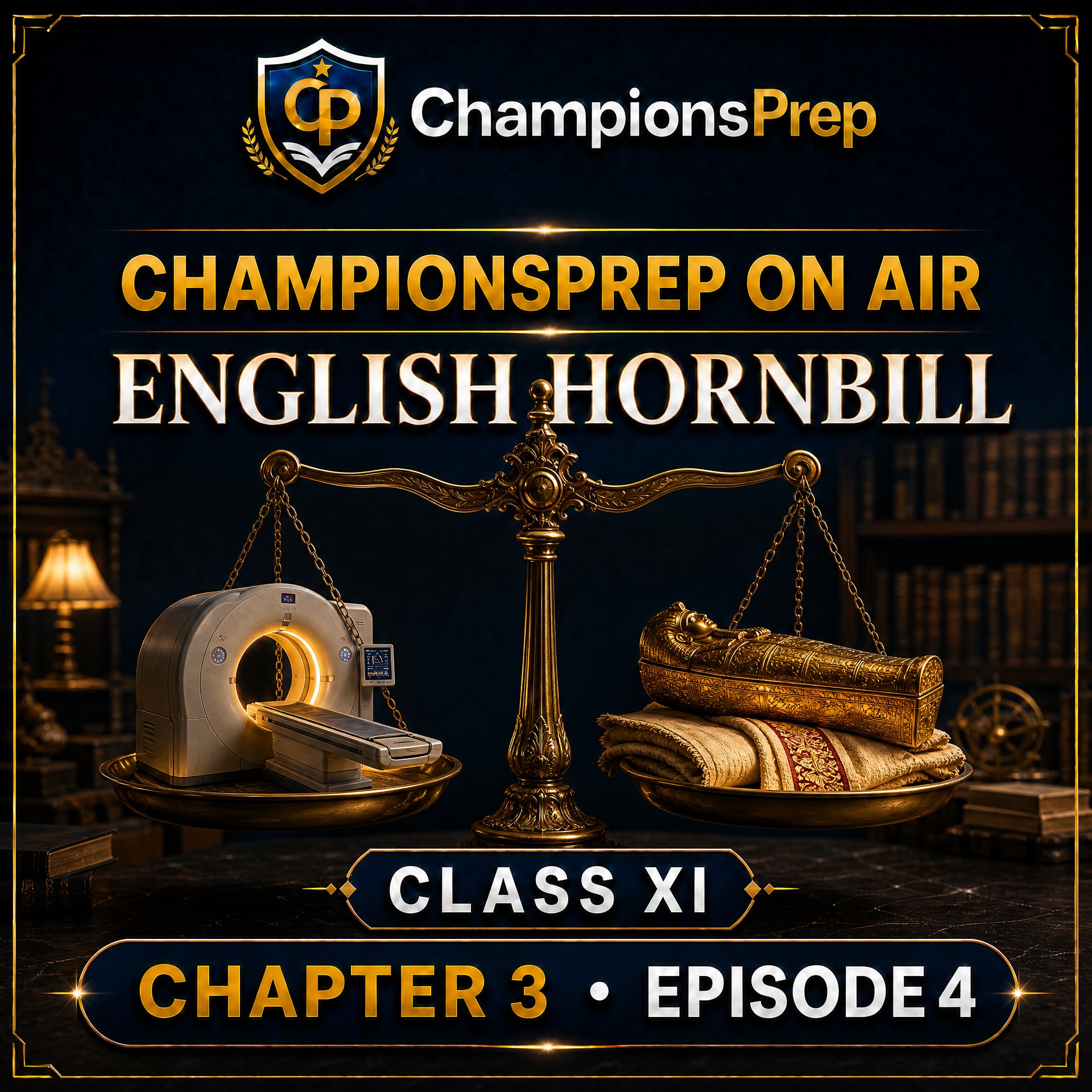
Science vs Tradition: The Central Debate in Discovering Tut
Does Advanced Technology Give Us Conclusive Evidence of Past Events?
Supporters of this view highlight how each technological leap in the chapter added genuine, verifiable detail — the X-ray's discovery of the missing ribs, the CT scanner's 1,700 cross-sectional images, and the resulting three-dimensional model. These tools do not rely on guesswork; they produce measurable, repeatable data that specialists in radiology, forensics, and anatomy can independently examine.
Yet the chapter itself is more cautious than triumphant. It presents the CT scan as a source of "new clues," not final answers, and openly states that the particulars of Tut's death remain unclear even after the scan. This nuance is worth raising in a debate: technology can narrow the range of possible explanations and eliminate false theories, but it does not automatically deliver certainty, especially when the physical evidence itself has been altered by earlier, cruder investigations.
Must Traditions, Rituals, and Funerary Practices Be Respected?
This is arguably the most emotionally resonant debate point in the chapter. Ancient Egyptians buried their dead with extraordinary care, believing that gold treasures and preserved bodies would secure a safe passage into the afterlife. Every element of the burial, from the shroud of flowers marking the season of death to the nested coffins, reflected deeply held religious conviction. Carter's dismantling of the body to remove its treasures, however practically justified, directly violated those original intentions.
At the same time, defenders of scientific study argue that respect for the past can take more than one form. Studying, documenting, and preserving Tutankhamun's remains for future generations — rather than leaving them vulnerable to theft or decay — can itself be seen as a form of respect, just one rooted in modern rather than ancient values. The debate ultimately hinges on whose definition of respect should take precedence: the beliefs of the people who created the burial, or the values of those who study it today.
Is Knowledge About the Past Useful to Complete Our Knowledge of the World?
The chapter implicitly argues yes — understanding a vanished civilisation's religious upheavals, family lineages, and medical mysteries enriches our broader understanding of human history and behaviour. The story of Akhenaten's religious revolution, for instance, offers insight into how quickly belief systems can shift under a single ruler's influence, a pattern with echoes far beyond ancient Egypt.
A more skeptical position might ask whether this knowledge changes anything meaningful for people today, given that it primarily satisfies curiosity rather than solving present-day problems. A strong debater, however, can respond that historical understanding shapes disciplines from medicine to sociology, and that dismissing "useless" curiosity ignores how often such curiosity has led to unexpected, practical breakthroughs.
How to Use This Debate in Your CBSE Answers
When answering discussion-based questions on this chapter, avoid picking only one side. CBSE evaluators reward students who can articulate both perspectives clearly before offering a reasoned personal conclusion. Structure your answer by presenting the case for scientific study, the case for restraint and tradition, and then a balanced closing view — ideally tied back to specific details from the chapter, such as Carter's resin dilemma or the CT scan's stated goals.
Related Reading
- Discovering Tut: The Saga Continues — Full Chapter Summary and Analysis
- Discovering Tut: Important Questions and Answers for CBSE Class 11
- Discovery, Mystery and Nature: Connecting All Three Hornbill Ch3 Texts
Sharpen Your Debate and Analysis Skills With ChampionsPrep
Discussion-based questions reward students who can think critically, not just recall facts. ChampionsPrep provides structured practice questions and model answers for exactly this kind of analytical thinking across the CBSE Class 11 English Hornbill syllabus. Registration is free, and you only pay as you use the platform, so you can start building stronger, exam-ready answers today.
Test Your Knowledge
Frequently Asked Questions
What is the main ethical debate raised in "Discovering Tut"? +
A1: The chapter raises the question of whether disturbing ancient remains for scientific study is justified, weighing the value of new knowledge against respect for the original burial traditions.
Does the chapter take a clear side in this debate? +
A2: No, the chapter presents both the scientific achievements and the damage caused by earlier investigations, leaving readers to weigh the arguments themselves.
How should students approach the "Talking about the Text" group discussion questions? +
A3: By preparing arguments for both sides of each statement and practising presenting them clearly and respectfully, since these exercises are designed to build discussion and reasoning skills.
Can this debate be connected to real-world examples beyond Egypt? +
A4: Yes, similar debates arise around excavating other ancient burial sites or indigenous remains worldwide, making this a useful topic for broader classroom discussion.
What is the best way to conclude an answer on this theme? +
A5: A balanced conclusion that acknowledges the value of scientific discovery while respecting the cultural significance of burial traditions tends to score well, as it shows nuanced thinking rather than a one-sided view.
Keep practising English
AI-powered feedback and structured revision for English — free to start, at your own pace.
AI-powered practice — free to start