

Management as an Art, Science and Profession: Understanding the Nature of Management
Is management something you are born knowing how to do, like an artistic talent, or something you can learn systematically, like physics? The NCERT Class 11 Business Studies syllabus tackles this question in the section on the "Nature of Management" — and the answer is: a bit of both, plus a partial claim to being a profession.
This is one of the most frequently tested conceptual areas in Chapter 1, because it requires comparing management against the defining features of art, science, and profession, one by one, rather than simply memorising a label.
Why This Question Matters
Management is as old as civilisation itself — organised activity has existed since the earliest human societies, long before anyone called it "management." But the formal study of management, with its own vocabulary and principles, is comparatively recent. Understanding whether it behaves more like an art, a science, or a profession explains how management is taught and evaluated today.
Management as an Art
Art is the skilful and personal application of existing knowledge to achieve a desired result — something acquired through study, observation, and experience, and dependent on the individual's creativity. Three features define any art:
- Existence of theoretical knowledge — Every art form rests on principles that experts have derived and written about, whether it is dance, music, or public speaking.
- Personalised application — The same underlying knowledge produces very different results in different hands. Two dancers or two writers, given identical training, will always express themselves differently.
- Based on practice and creativity — Art is not just theory; it is the creative, practical application of that theory. All music rests on seven basic notes, yet what makes one composition unique is the artist's creative interpretation of those same notes.
Management satisfies all three criteria. A successful manager practises the art of management daily, drawing on a substantial and growing body of literature in marketing, finance, and human resources. Different managers apply the same universal principles differently depending on their creativity, judgment, and the specific situation they face — which is exactly why some managers consistently outperform others working from an identical playbook.
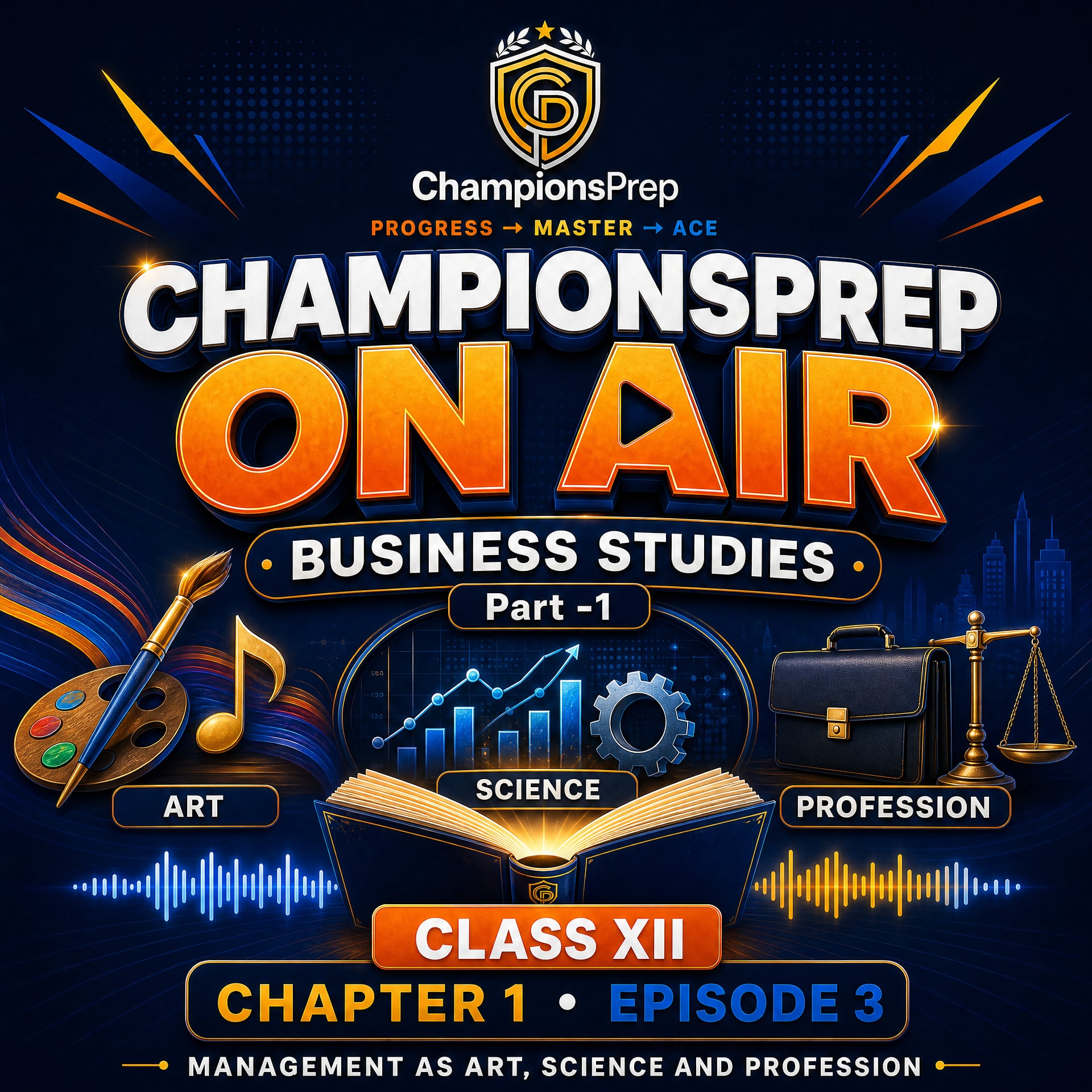
Management as an Art, Science and Profession: Understanding the Nature of Management
Management as a Science
Science is a systematised body of knowledge that explains general truths through cause-and-effect relationships. Its defining features are:
- Systematised body of knowledge — Principles are organised logically and explain a cause leading to an effect, the way the law of gravity explains why an apple falls.
- Principles based on experimentation — Scientific principles are developed through observation and then verified through repeated experimentation under controlled conditions.
- Universal validity — True scientific principles apply consistently, everywhere, under the same conditions.
Management partially satisfies these criteria. It does have a systematised body of knowledge, built up over decades by scholars like F.W. Taylor (scientific management) and Henri Fayol (functional management principles), and it borrows heavily from disciplines like economics, sociology, psychology, and mathematics. However, because management deals with human beings and human behaviour, its principles cannot be tested and replicated with the same precision as physics or chemistry. Two managers applying the same principle to two different teams may see very different results. For this reason, management is often described as an inexact science — scientific in structure, but not in the strict, universally predictable sense that the physical sciences are.
Management as a Profession
A profession is generally defined by five characteristics:
- Well-defined body of knowledge, acquired through structured instruction.
- Restricted entry, controlled through examinations or a specific educational qualification, the way a chartered accountant must clear the ICAI exams.
- Professional association that regulates entry and enforces standards, like the Bar Council for lawyers.
- Ethical code of conduct that binds every member of the profession.
- Service motive, where the primary aim is serving the client's interest rather than self-interest.
Management falls short here in a few ways. While there is genuine growth in management as an academic discipline — taught at institutions like the Indian Institutes of Management (IIMs) — there is no restriction on who can be appointed as a manager. Anyone can be designated "manager" regardless of formal qualifications, unlike medicine or law, where practising without a valid degree is illegal. Bodies like the All India Management Association (AIMA) exist and have laid down codes of conduct, but membership is not compulsory and carries no statutory backing. A business's core purpose is also still generally profit-oriented rather than purely service-oriented, though efficient management does indirectly serve society through better products and fair prices.
The fair conclusion, and the one examiners expect, is that management does not meet the full, strict criteria of a profession, but it does display several professional characteristics and continues to move in that direction as management education matures.
Bringing It Together
Management, then, is best understood as a discipline with the personalised, creative application of an art, resting on the systematised, evolving knowledge base of a science, and increasingly adopting — without fully achieving — the standards of a profession. These three lenses are not mutually exclusive; a well-rounded manager typically draws on all three at once.
Related Reading on ChampionsPrep
- Link to "What Is Management? Meaning, Definition and Characteristics" for readers who have not covered the basics yet.
- Link to "Levels of Management" to see how these art, science, and profession qualities show up differently at each management level.
- Link to "Functions of Management" to connect theory with the day-to-day practice of planning, organising, and controlling.
- Link to "Objectives and Importance of Management" for the broader "why" behind this discussion.
Strengthen Your Concept Clarity
Questions on the nature of management often appear as long-answer or case-based questions in board exams. ChampionsPrep's AI-powered platform helps CBSE and Maharashtra Board Class 11 and 12 Commerce students practise exactly this kind of application-based question for ₹10 a session, alongside dedicated prep for CUET, IPMAT, JIPMAT, NPAT, and SET. Visit https://app.championsprep.in to build exam-ready clarity on this topic.
Test Your Knowledge
Interactive Practice: Business vs Profession vs Employment
Frequently Asked Questions
Is management an art or a science? +
Management is both. It has the systematised, theory-based structure of a science, but its application is personal, creative, and situational — the hallmark of an art. NCERT describes it as having features of both, which complement rather than contradict each other.
Why is management called an "inexact science"? +
Because although management has developed general principles through observation and experience, these principles deal with unpredictable human behaviour, so outcomes cannot be replicated with the same precision as in the physical sciences.
Does management fully qualify as a profession? +
No. While it has a growing body of knowledge and some professional associations like AIMA, entry into management is not restricted by a mandatory qualification or exam, and membership in a professional body is not compulsory, unlike law or medicine.
Name two management thinkers whose principles are cited as evidence of management's scientific nature. +
F.W. Taylor (scientific management principles) and Henri Fayol (functional management principles).
What are the three basic features that qualify something as an "art"? +
Existence of theoretical knowledge, personalised application of that knowledge, and a basis in practice and creativity.
Keep practising Business Studies
AI-powered feedback and structured revision for Business Studies — free to start, at your own pace.
AI-powered practice — free to start