
Goodwill Basics
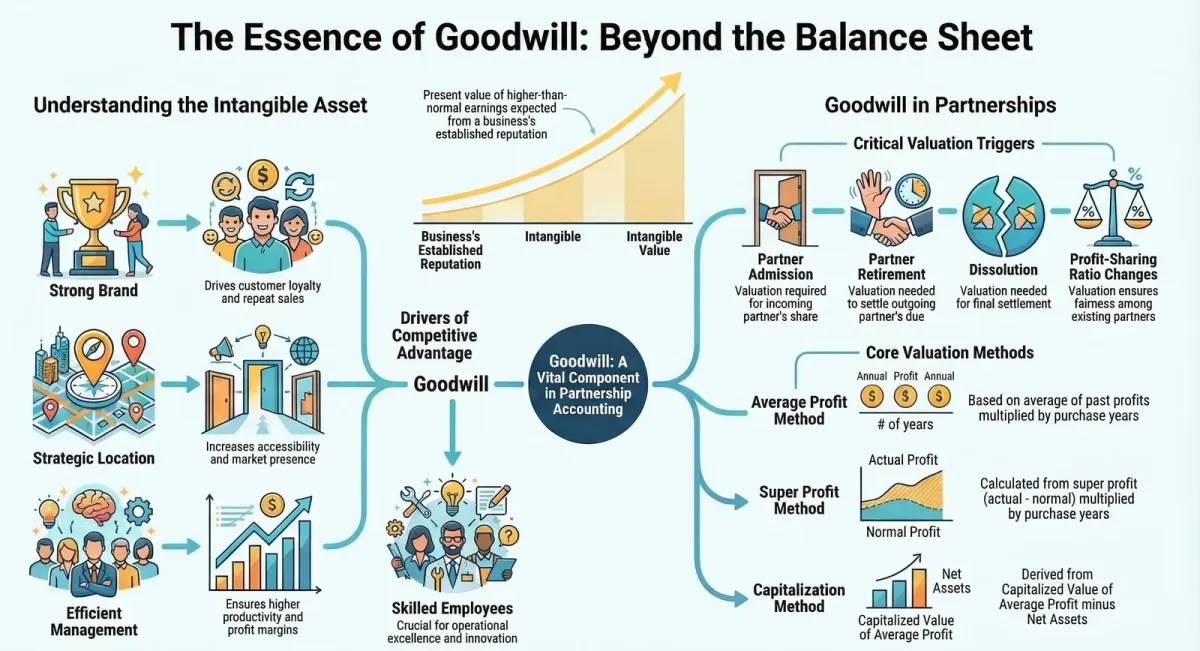
Goodwill is one of the most important topics in Class 12 Accountancy, especially in partnership reconstitution problems. It represents the intangible value of a business that arises from reputation, customer loyalty and other competitive advantages.
Meaning of Goodwill
Goodwill refers to the value of a firm’s reputation that enables it to earn profits higher than normal.
In simple words:
Goodwill is the present value of future super profits expected from a business.
It arises due to favorable factors that help the business generate higher earnings.
Factors Creating Goodwill
Goodwill may arise due to several business advantages:
-
Strong brand reputation
-
Loyal customer base
-
Strategic location
-
Skilled employees
-
Efficient management
-
Established market presence
These factors allow the business to earn more than normal industry profits.
Goodwill in Partnership Accounting
In partnership firms, goodwill becomes important during:
-
Admission of a partner
-
Retirement of a partner
-
Change in profit-sharing ratio
-
Dissolution of partnership
In such cases, goodwill must be valued and adjusted among partners.
Why Goodwill Valuation is Important
Goodwill valuation helps determine:
-
Fair compensation to existing partners
-
Value of the business reputation
-
Correct profit-sharing adjustments
Therefore, it is an essential concept in partnership accounts and business valuation.
Final Thoughts
Understanding goodwill is the first step toward mastering goodwill valuation methods, which include:
-
Average Profit Method
-
Super Profit Method
-
Capitalization Method
Once these methods are clear, solving goodwill problems becomes much easier.
AI-powered practice — free to start