
Capitalization Method + Exam Strategy
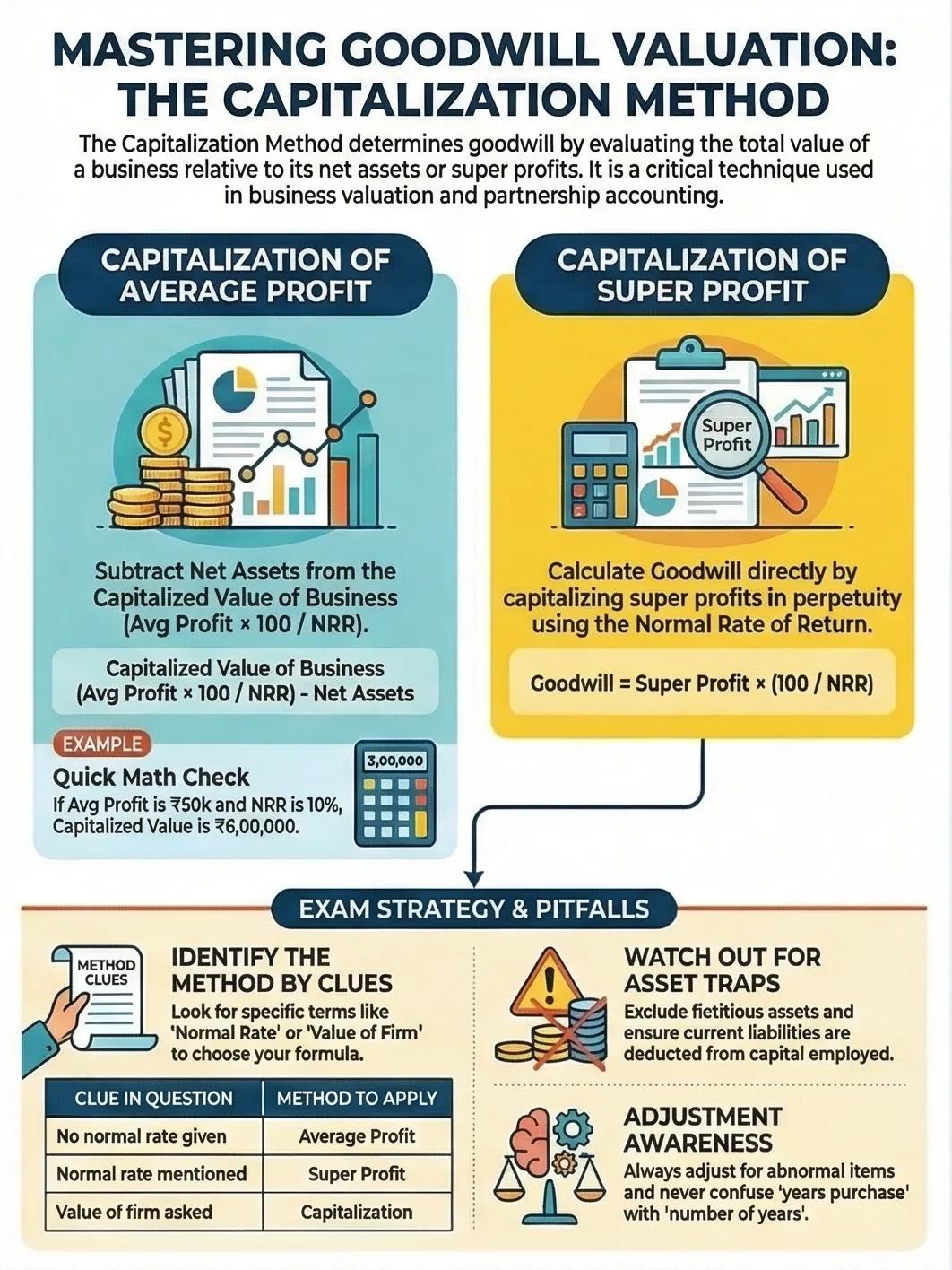
The Capitalization Method determines goodwill by calculating the total value of the business and comparing it with its net assets.
This method is commonly used in business valuation and partnership reconstitution.
Method 1: Capitalization of Average Profit
Formula
Capitalized Value of Business = (Average Profit × 100) ÷ Normal Rate of Return
Goodwill = Capitalized Value − Net Assets
Example
Average Profit = ₹50,000 Normal Rate = 10%
Capitalized Value = (50,000 × 100) ÷ 10 Capitalized Value = ₹5,00,000
Net Assets = ₹2,75,000
Goodwill = ₹5,00,000 − ₹2,75,000 Goodwill = ₹2,25,000
Method 2: Capitalization of Super Profit
Formula:
Goodwill = (Super Profit × 100) ÷ Normal Rate of Return
This method calculates the present value of super profits in perpetuity.
How to Identify the Correct Method in Exams
Students should identify the method based on clues in the question.
| Clue in Question | Method |
|---|
No normal rate given | Average Profit | Normal rate mentioned | Super Profit | Value of firm asked | Capitalization |
Common Mistakes Students Make
Students often make these mistakes:
-
Including fictitious assets in capital employed
-
Ignoring current liabilities
-
Forgetting to adjust abnormal items
-
Confusing years purchase with number of years
Avoiding these mistakes improves accuracy.
Final Thoughts
The capitalization method is slightly more advanced but very useful in business valuation and partnership accounting problems.
With proper understanding and practice, students can easily solve goodwill valuation questions in board exams and competitive exams.
AI-powered practice — free to start